Cooling System Service
Cooling System Service in Philadelphia, PA — Coolant Flush, Radiator & More
Your engine produces an enormous amount of heat during normal operation — enough to destroy itself within minutes if that heat is not continuously and efficiently removed. The cooling system is what stands between a healthy engine and a catastrophic overheat failure. A well-maintained cooling system keeps your engine operating at the ideal temperature year-round, whether you are idling in summer traffic on I-95 or starting a cold engine on a January morning in Northeast Philadelphia. At TOP CONCEPT LLC, we service all cooling system components to keep your engine protected and your heater working when you need it.
How the Cooling System Works
The cooling system circulates a mixture of coolant (antifreeze) and distilled water through passages in the engine block and cylinder head, absorbing heat from combustion. The hot coolant then flows to the radiator, where fins and airflow (from driving or from the electric cooling fan) transfer the heat to the atmosphere. A thermostat regulates the process by blocking coolant flow until the engine reaches its optimal operating temperature, then opening to allow circulation through the full system.
Supporting components include the water pump (which circulates coolant under pressure), the coolant reservoir (which accommodates coolant expansion as it heats), the radiator cap (which pressurizes the system to raise the boiling point of coolant), heater core (which uses engine heat to warm the passenger cabin), and various hoses, clamps, and sensors throughout the system.
Warning Signs of Cooling System Problems
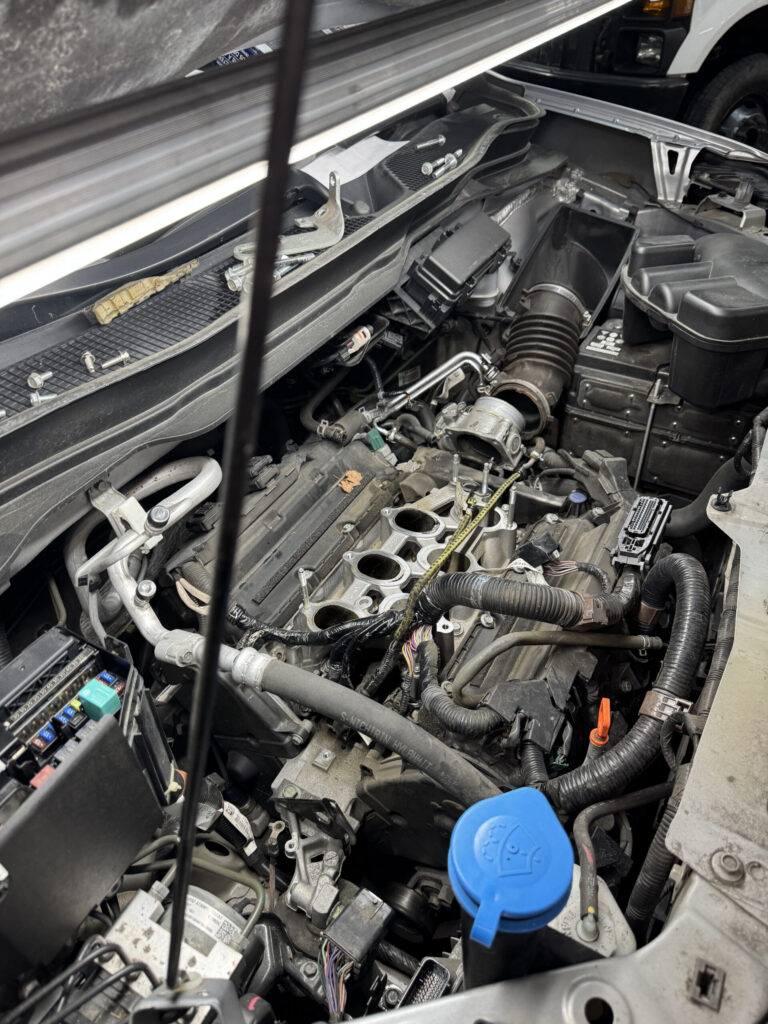
Cooling system failures rarely happen without warning. Recognizing early symptoms can prevent an overheated engine — one of the most expensive repairs in automotive service:
- Temperature gauge climbing higher than normal — Any movement above the normal operating range is a warning sign to pull over safely
- Steam or smoke from under the hood — Indicates coolant boiling or a significant leak onto hot components
- Sweet smell from the engine bay or inside the cabin — The characteristic smell of ethylene glycol coolant leaking
- Coolant puddle under the parked vehicle — Can be bright green, orange, pink, or blue depending on the coolant type
- Heater blowing cold air — Often indicates low coolant level, a stuck thermostat, or a clogged heater core
- White smoke from the exhaust — A significant warning sign of a blown head gasket allowing coolant into the combustion chamber
- Milky or foamy oil on the dipstick — Coolant mixing with engine oil, indicating a serious internal leak
- Engine overheating warning light — Stop driving immediately if this illuminates; continued operation risks permanent engine damage
Coolant Flush & System Refill
Coolant does not last forever. Over time, the corrosion inhibitors and additives in antifreeze deplete, allowing the coolant to become acidic. Acidic coolant accelerates corrosion inside the aluminum cooling passages of modern engines, attacks gaskets and seals, and can cause electrolytic damage to the water pump, heater core, and radiator. Old coolant also provides less freeze protection and has a reduced boiling point.
A proper coolant flush at TOP CONCEPT LLC includes:
- Complete drain of the old coolant from the system
- System flush with fresh water to remove contaminants and loose scale
- Inspection of drain plug, clamps, and visible hoses during the drain process
- Refill with the manufacturer-specified coolant type (HOAT, OAT, G-12, G-13, etc.) mixed to the correct concentration
- System bleed to remove air pockets that cause hot spots and heater malfunction
- Pressure test to verify no leaks before returning the vehicle
- Check of coolant freeze protection level with a refractometer
Most manufacturers recommend coolant replacement every 2–5 years or 30,000–100,000 miles depending on the coolant type. Using the correct coolant specification for your vehicle is critical — mixing incompatible coolant types can cause gel formation that blocks cooling passages.
Radiator Repair & Replacement
Modern radiators are constructed from aluminum cores with plastic end tanks — lighter and more efficient than the all-metal radiators of older vehicles, but more susceptible to physical damage and plastic degradation over time. Common radiator failures include:
- Cracked plastic end tanks from thermal cycling and age
- Clogged core from scale buildup reducing flow and heat transfer efficiency
- Bent or damaged fins from road debris impact reducing airflow
- Corrosion pinholes from neglected coolant maintenance
- Transmission oil cooler leaks (on vehicles with integrated transmission coolers) allowing oil into the coolant
We inspect the radiator with every cooling system service and can repair minor leaks or replace the radiator when damage is beyond repair. We source quality replacement radiators that meet or exceed OEM specifications for flow rate and heat rejection capacity.
Water Pump Replacement
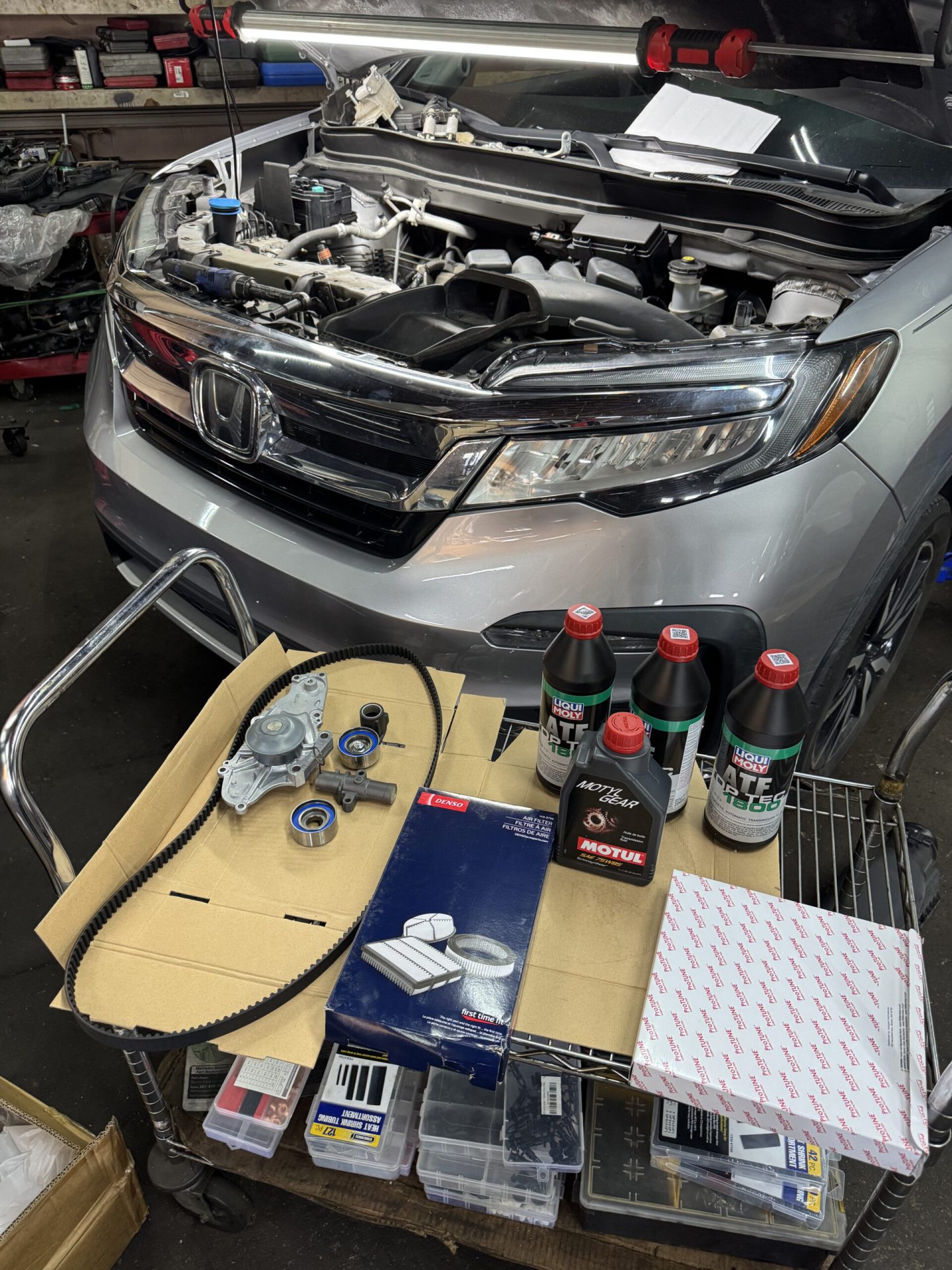
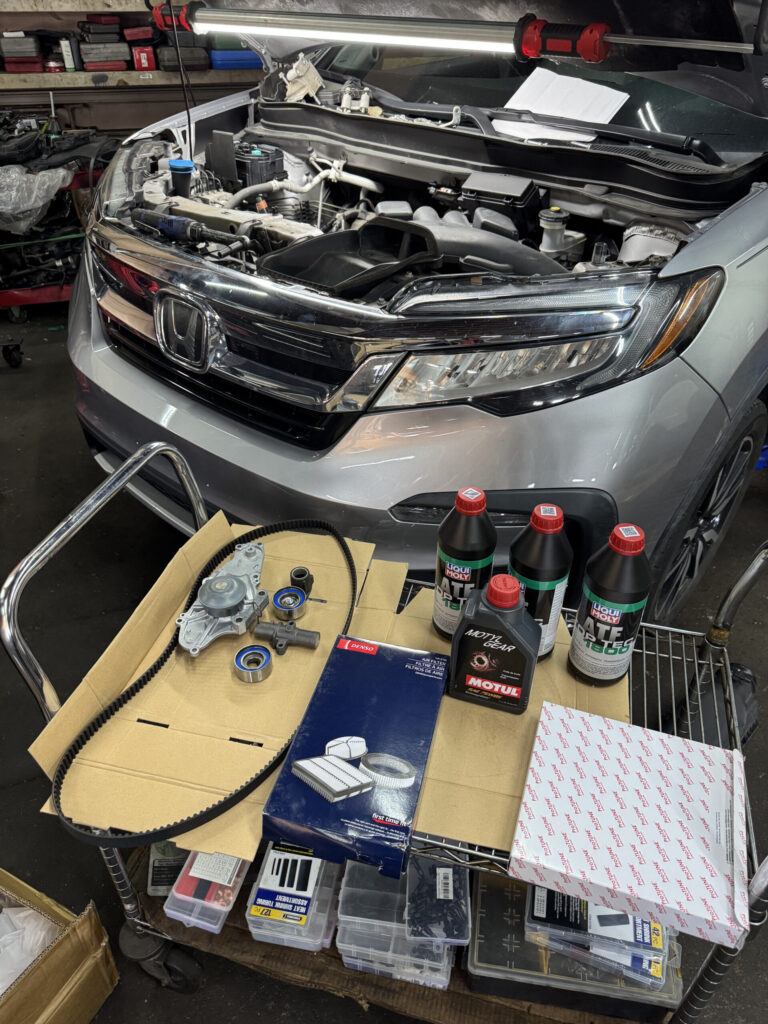
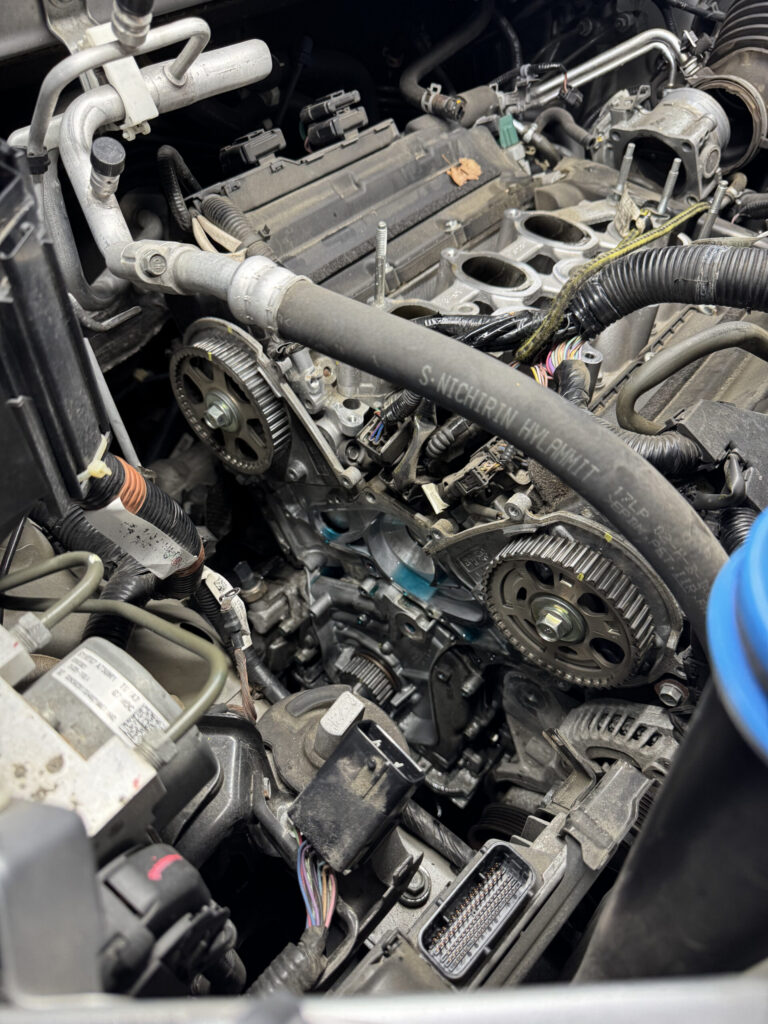
The water pump is the heart of the cooling system — it circulates coolant continuously whenever the engine is running. Most water pumps are driven by the serpentine belt or the timing belt. When the water pump fails, coolant circulation stops and the engine overheats within minutes.
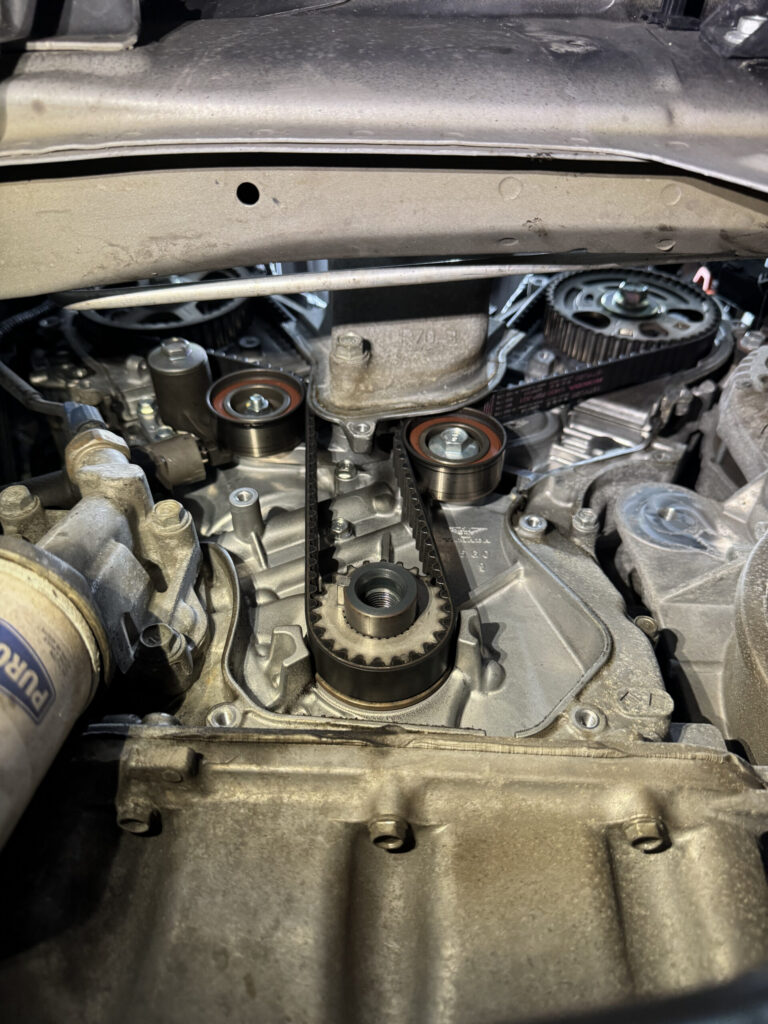
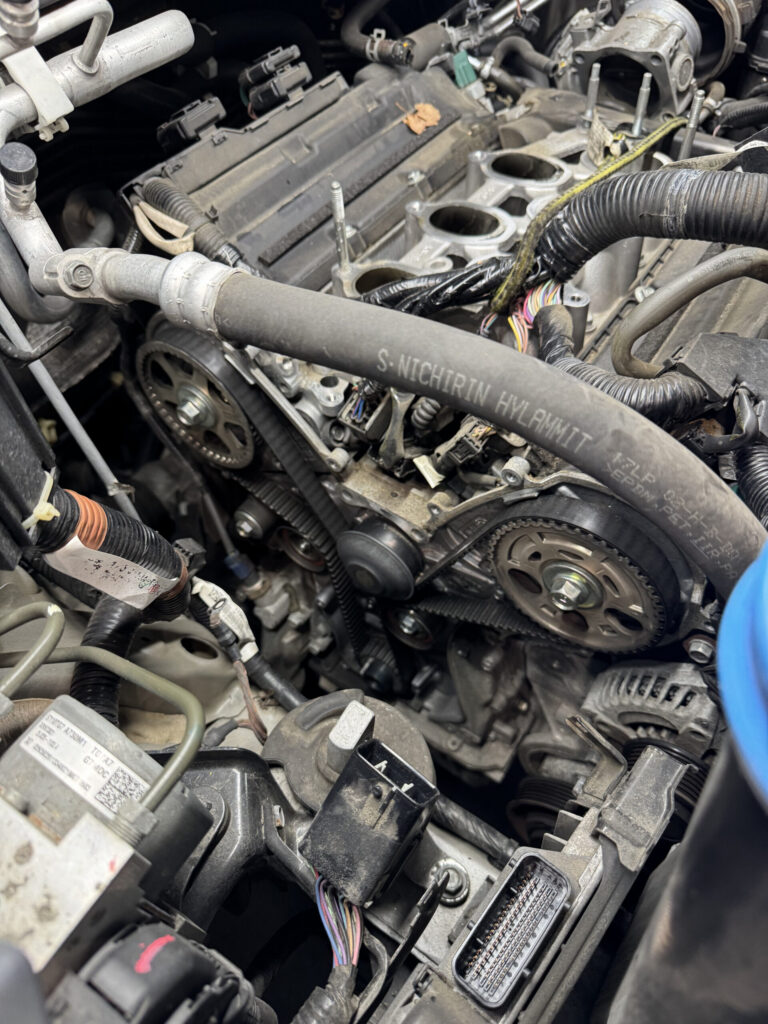
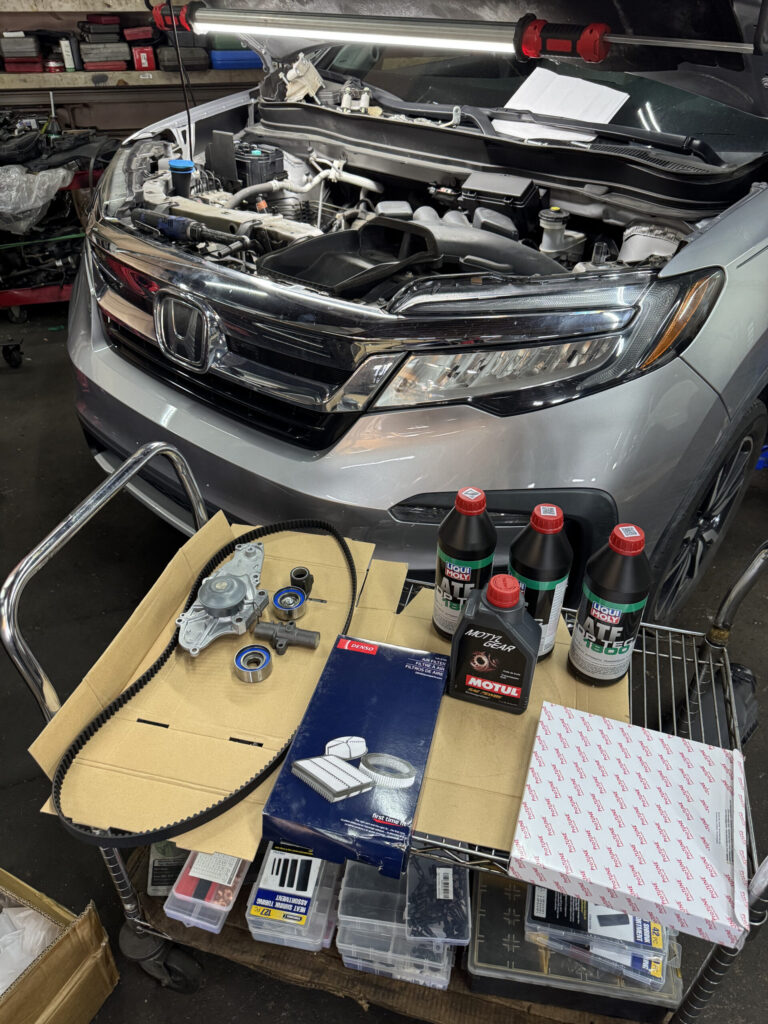
Water pump failure symptoms include coolant leaking from the weep hole in the pump housing (a sign that the internal seal is failing), a grinding or growling noise from the pump bearing, wobble in the pump pulley, and overheating at idle or low speeds when the water pump is under less load. Because the water pump on many vehicles is located behind the timing belt cover, it is strongly recommended to replace the water pump when the timing belt is replaced — the labor to access it is already performed, making the incremental cost of a new pump very small relative to the risk of the pump failing shortly after the timing belt service.
Thermostat Replacement
The thermostat is an inexpensive component that causes disproportionately large problems when it fails. A thermostat stuck closed prevents coolant circulation and causes rapid overheating. A thermostat stuck open keeps the engine from reaching operating temperature, resulting in poor fuel economy, reduced heater output, excessive oil dilution from cold starts, and check engine codes for insufficient warm-up rate.
Thermostat replacement is a straightforward service, but the thermostat housing on many modern engines is plastic and can crack with age — particularly if the engine has ever overheated. We inspect the housing during thermostat replacement and replace it if any cracking or corrosion is present.
Heater Core Service
The heater core is a small radiator mounted inside the dashboard that uses engine coolant to warm the passenger cabin. Heater core failures cause either a sweet coolant smell inside the vehicle (indicating a leak), foggy windows from coolant vapor entering the HVAC system, or cold air from the heater vents despite a fully warmed engine. Heater core replacement is labor-intensive on most modern vehicles because accessing it requires removing significant dashboard components, but it is a repair TOP CONCEPT LLC performs regularly.
Serving Philadelphia, Northeast Philly, Bucks County & Montgomery County
Summer traffic jams on Roosevelt Boulevard, stop-and-go commutes through Mayfair and Frankford, and frigid Northeast Philadelphia winters all put additional stress on your cooling system. TOP CONCEPT LLC at 6920 New State Rd, Philadelphia, PA 19135 is your local cooling system specialist, serving drivers from across Northeast Philly as well as Bucks County (Bensalem, Bristol, Levittown) and Montgomery County (Cheltenham, Abington, Horsham). We can typically service your cooling system the same week you call — no weeks-long wait for a dealership appointment.
Frequently Asked Questions About Cooling System Service
What happens if I ignore an overheating engine?
Continued driving with an overheating engine can warp or crack the cylinder head, blow the head gasket, damage piston rings and cylinder walls, or seize the engine entirely. A blown head gasket repair typically costs $1,500–$3,000. A seized engine requiring replacement can cost $4,000–$8,000 or more. The cooling system service that would have prevented it costs a fraction of that amount. If your temperature gauge climbs into the red, pull over safely and call for a tow.
How often should I have my coolant changed?
It depends on the coolant type in your vehicle. Traditional green coolant (IAT) should be replaced every 2 years or 30,000 miles. Extended-life coolants (OAT and HOAT, typically orange, pink, or blue) last 5 years or 100,000–150,000 miles. Check your owner’s manual for the specific interval and coolant type your vehicle requires. When in doubt, we can test your coolant’s pH and freeze protection level to determine whether it needs replacement.
Can I add water to my radiator if coolant is low?
In an emergency, adding distilled water is acceptable to bring you to a shop safely, but plain tap water should never be used long-term — it contains minerals that deposit scale inside the cooling system. Always top up with the correct premixed coolant for your vehicle. Repeatedly needing to add coolant means there is a leak somewhere in the system that needs to be found and repaired.
My heater stopped blowing warm air — what is the most common cause?
Low coolant level is the most common cause — if the system does not have enough coolant, the heater core may not receive adequate flow. After that, a stuck-open thermostat (preventing the engine from reaching operating temperature), a clogged heater core, or a failed blend door actuator (in climate-control systems) are the next most likely culprits. We diagnose heater problems accurately and efficiently.
Is a small coolant leak something I can ignore for a while?
No. Even a slow coolant leak will cause the coolant level to drop over time, and if it reaches a critically low level at an inconvenient moment — during a long drive on a hot day — the engine will overheat rapidly. Coolant leaks also do not stay small; a weeping hose fitting or a small crack in a plastic tank typically worsens with time and temperature cycles. Address leaks promptly while they are still inexpensive to fix.
Protect Your Engine From Overheating — Call TOP CONCEPT LLC Today
A few hundred dollars of preventive cooling system maintenance can protect an engine worth thousands. TOP CONCEPT LLC is ready to inspect, service, and repair your vehicle’s cooling system professionally and affordably.
Call us at (267) 242-4992 or stop by 6920 New State Rd, Philadelphia, PA 19135. We are open Monday through Friday 9 AM–6 PM and Saturday 9 AM–2 PM. Do not wait until your temperature gauge tells you it is too late.